
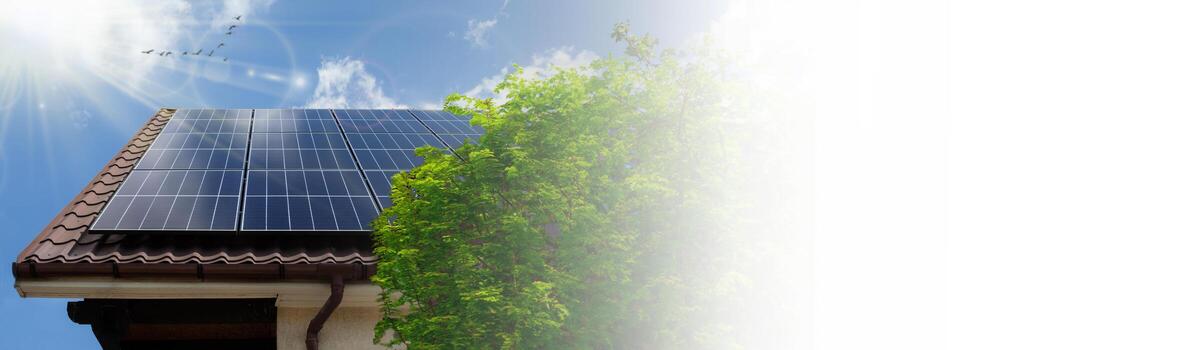
Rooftop Solar for Homeowners in Pune: Benefits, Savings & Subsidy Guide (2026)
Rooftop Solar for Homeowners in Pune
Thinking about rooftop solar in Pune or Maharashtra? Discover the real savings, PM Surya Ghar subsidy benefits, payback period, and why 2026 is the right time to switch.

Rooftop Solar for Homeowners in Pune: Benefits, Savings & Subsidy Guide (2026)
If you've noticed your monthly electricity bill creeping up year after year, you're not alone. Homeowners across Pune, Pimpri-Chinchwad, and the wider Maharashtra region are increasingly turning to rooftop solar — not as an experiment, but as a practical, long-term financial decision. Here's a clear, no-jargon look at why rooftop solar makes sense for your home in 2026.
1. Pune Gets Some of the Best Sunlight in the Country
Maharashtra receives an average of 300+ sunny days a year, and Pune's climate is ideally suited for solar generation almost year-round — even through most of the monsoon, thanks to diffuse light generation. This means a rooftop solar system installed on your home isn't just theoretically efficient — it performs consistently, month after month.
2. The Numbers Actually Work in Your Favour
This is where most homeowners are pleasantly surprised:
- Lower electricity bills: A well-sized rooftop system can offset 70–90% of an average household's monthly electricity consumption.
- Government subsidy support: Under the PM Surya Ghar Muft Bijli Yojana, residential homeowners can receive central government subsidies that significantly reduce the upfront cost of installation.
- Financing options: Many homeowners now opt for EMI-based solar loans at competitive interest rates, meaning your monthly EMI can be close to (or even lower than) what you were previously paying as an electricity bill — except now you're building an asset, not paying a recurring cost.
- Payback period: Most residential systems in Pune pay for themselves within 4 to 6 years, and continue generating free electricity for 20+ years after that.

3. Increased Property Value
Homes with an installed, functioning solar system are increasingly attractive to buyers and renters — solar is no longer seen as a niche upgrade but as a value-adding, future-ready feature, especially as electricity tariffs continue to rise.
4. Low Maintenance, Long Lifespan
Modern rooftop solar systems use panels certified under DCR (Domestic Content Requirement) and ALMM (Approved List of Models and Manufacturers) norms, built to withstand Pune's weather conditions for 25+ years. With a basic Annual Maintenance Contract (AMC) — periodic cleaning and performance checks — your system continues operating at peak efficiency with minimal homeowner effort.
5. A Genuine Environmental Impact
An average residential rooftop solar system can offset several tonnes of CO2 emissions annually — equivalent to planting dozens of trees every year. For homeowners who care about sustainability, this is a tangible, measurable contribution.

How to Get Started
-
Get a site assessment
Roof area, shading, and orientation determine your ideal system size.
-
Understand your subsidy eligibility
Check your eligibility under PM Surya Ghar.
-
Compare payment options
Compare EMI vs. cash payment options based on your budget.
-
Choose a certified EPC partner
Select a partner who handles design, installation, net-metering paperwork, and after-sales AMC support — this last part matters more than most homeowners realize, since improper installation or missing documentation is the most common cause of delays and lost subsidy claims.
Final Thoughts
Rooftop solar in 2026 isn't just an environmental choice — it's a financial one. With falling system costs, strong government subsidy support, and Pune's favourable climate, the math clearly favours homeowners who make the switch now rather than later.
Ready to find out how much you could save? Reach out for a free rooftop assessment and a personalized savings estimate for your home.
Popular Posts
-
-
-

MNRE Extends Non-DCR Panel Relief to Dec 2026
07 Aug 2026 -

-

-

